
Walking in Hope: Holding Fast When the Outcome Is Unclear
When the Future Feels Uncertain
There are seasons when faithfulness is not difficult because of hardship alone, but because of uncertainty. The path ahead feels unclear. Outcomes are unresolved. Prayers seem unanswered. For many Christian women, this lack of clarity can quietly erode hope if it is not anchored in truth.
Biblical hope is not wishful thinking. It is confident expectation rooted in God’s character rather than circumstances.
To walk in hope is to remain anchored to God’s promises even when the future has not yet taken shape.
The Lie We Often Walk With (Lie-Locked Living)
The Lie: If I cannot see how this will turn out, it is safer not to hope too much.
This lie attempts to protect the heart by lowering expectation. It replaces faith with emotional self-preservation.
Lie-Locked Living shows up as guarded optimism, spiritual detachment, and reluctance to trust fully.
God invites His daughters to hope boldly—not because outcomes are guaranteed, but because He is faith...
Walking in Steadfastness: Remaining Faithful When Pressure Increases
When Faithfulness Is Tested
There are seasons when faith feels light and seasons when it feels weighted. Pressure increases. Expectations rise. Opposition surfaces. Fatigue sets in. For many Christian women, this is the point where consistency becomes costly and faithfulness is quietly tested.
Scripture never minimizes these moments. Instead, it honors steadfastness—the quiet, courageous decision to remain faithful when walking away might feel easier.
To walk in steadfastness is to stay anchored in truth when pressure intensifies and resolve is refined.
The Lie We Often Walk With (Lie-Locked Living)
The Lie: If this were truly God’s will, it would not feel this hard.
This lie equates difficulty with misdirection. It tempts women to interpret resistance as a sign to retreat rather than a call to remain rooted.
Lie-Locked Living shows up as second-guessing, spiritual fatigue, and the urge to abandon commitments when opposition grows.
God’s Word reframes pressure as a place where ...
Timothy: Faith That Grows Over Time

✨ Step into Steady Growth
There is a kind of growth that does not announce itself.
It does not arrive with a moment.
It does not come with a sudden shift.
It unfolds… slowly… faithfully… over time.
And in a world that celebrates instant change…
God often chooses a different way.
In 2 Timothy 1:5 (KJV), we are given a glimpse into a life shaped not by a single moment… but by a steady foundation:
“When I call to remembrance the unfeigned faith that is in thee, which dwelt first in thy grandmother Lois, and thy mother Eunice…”
Before Timothy ever led…
before he ever stepped into responsibility…
faith was already growing within him.
🌿 When Faith Is Formed Quietly
Timothy’s story is not one of dramatic interruption like Paul’s.
It is one of consistent formation.
Faith passed down.
Truth lived out.
Growth that was cultivated, not rushed.
And when the time came…
he was ready.
Not because he forced it…
But because he had been formed in it.
🌸 The Coaching Focus
No...
Walking in Gentleness: Strength Expressed Through Grace
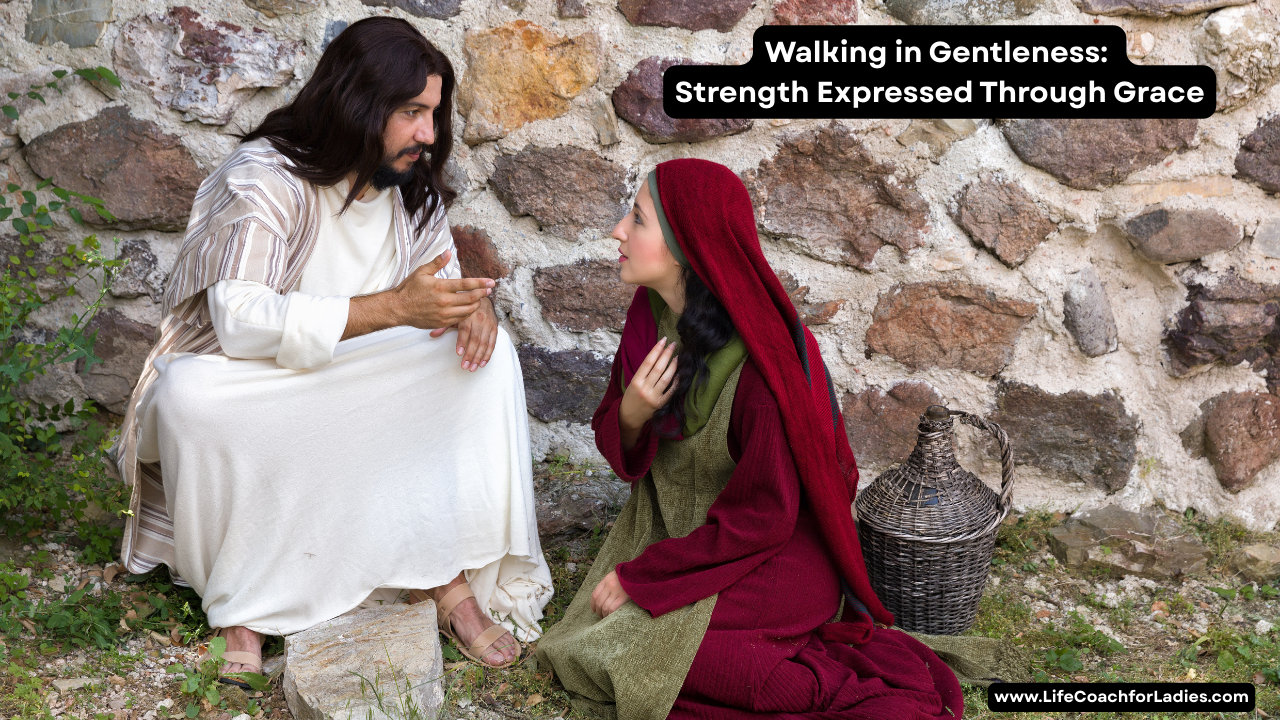
When Gentleness Is Misunderstood
Gentleness is often mistaken for weakness, passivity, or a lack of conviction. Many Christian women hesitate to practice gentleness because they fear it will diminish their voice, authority, or boundaries. Yet Scripture presents gentleness as a fruit of spiritual maturity and inner strength.
To walk in gentleness is not to withdraw strength, but to govern it with grace. Gentleness allows truth to be communicated without harm and strength to be expressed without force.
The Lie We Often Walk With (Lie-Locked Living)
The Lie: If I am gentle, I will be overlooked, ignored, or taken advantage of.
This lie frames gentleness as vulnerability without protection. It pressures women to harden themselves rather than trust God to guard their influence.
Lie-Locked Living shows up as defensiveness, sharpness in communication, or withholding compassion to avoid being hurt.
God’s Word redefines gentleness as controlled strength.
Scripture Anchor (KJV)
“The s...
Paul: Transformation That Rewrites Your Story
✨ Step into Transformation
There are moments in life that divide everything into two parts:
Before…
and after.
Before the mistake.
Before the regret.
Before the season that still whispers your name in ways you wish it would not.
And then… something happens.
Something shifts.
Not outwardly at first…
but deeply, quietly, within.
In Acts of the Apostles 9:1–6 (KJV), we meet a man known as Saul.
Strong.
Driven.
Certain.
And completely wrong.
“And as he journeyed, he came near Damascus: and suddenly there shined round about him a light from heaven:” — Acts 9:3 (KJV)
🌿 When God Interrupts the Story
Saul was not searching for truth.
He believed he already had it.
He was actively opposing the very people God was calling him to become.
And yet…
God did not wait for Saul to get it right.
He met him on the road.
Blinding light.
Clear voice.
Undeniable moment.
“Saul, Saul, why persecutest thou me?” — Acts 9:4 (KJV)
This was not just correction.
It was interruptio...
Walking in Self-Control: Managing Emotions, Reactions, and Choices Wisely
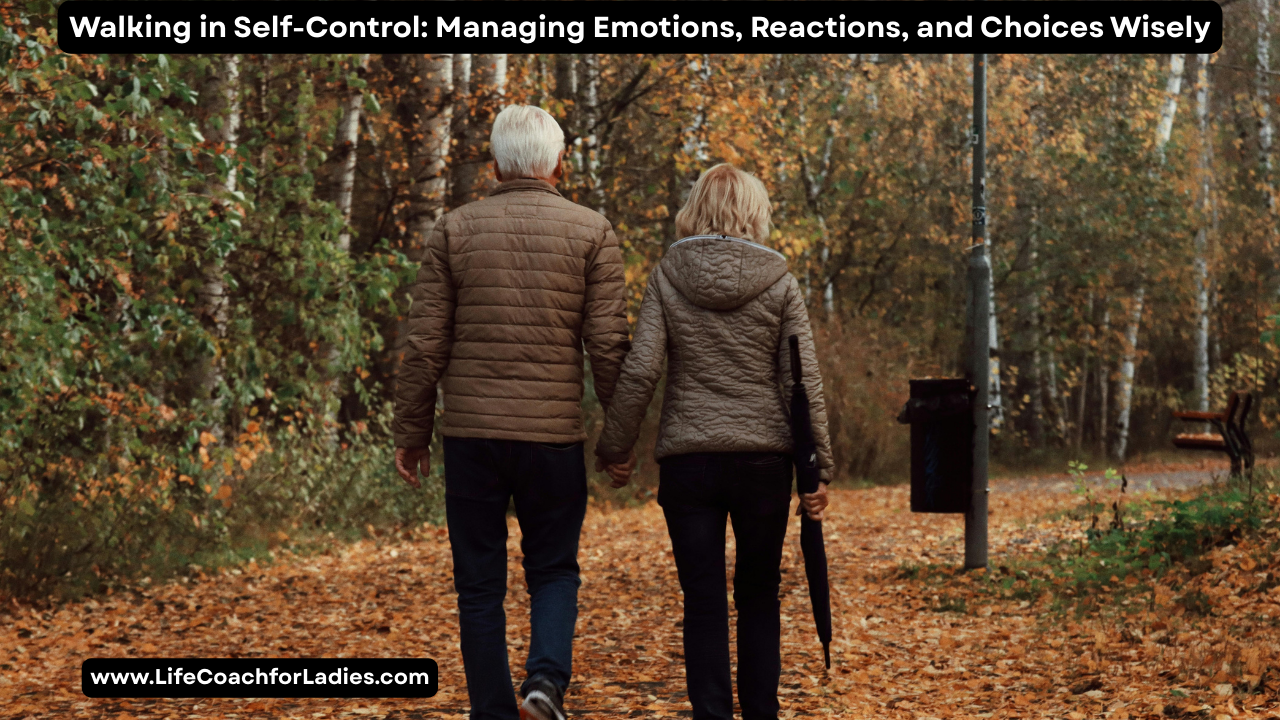
September 17 marks Constitution Day, a reminder of the wisdom required for self-governance. The framers of the Constitution understood something timeless: freedom without restraint collapses into chaos. Laws were established not to restrict dignity, but to preserve it. In much the same way, Scripture teaches that self-control protects spiritual freedom. A life without internal governance becomes reactive, unstable, and easily led astray. But when the Spirit governs the heart, freedom flourishes.
When Emotions Feel Loud
Emotions are God-given, yet unmanaged emotions often lead faithful women to say, decide, or react in ways they later regret. Self-control is not emotional suppression; it is spiritual maturity expressed through wise response rather than impulsive reaction.
Scripture does not call women to ignore emotion, but to govern it with truth.
To walk in self-control is to steward emotions, thoughts, and actions in alignment with God’s wisdom.
The Lie We Often Walk With (L...
Barnabas: The Power of Encouragement in a Discouraging World
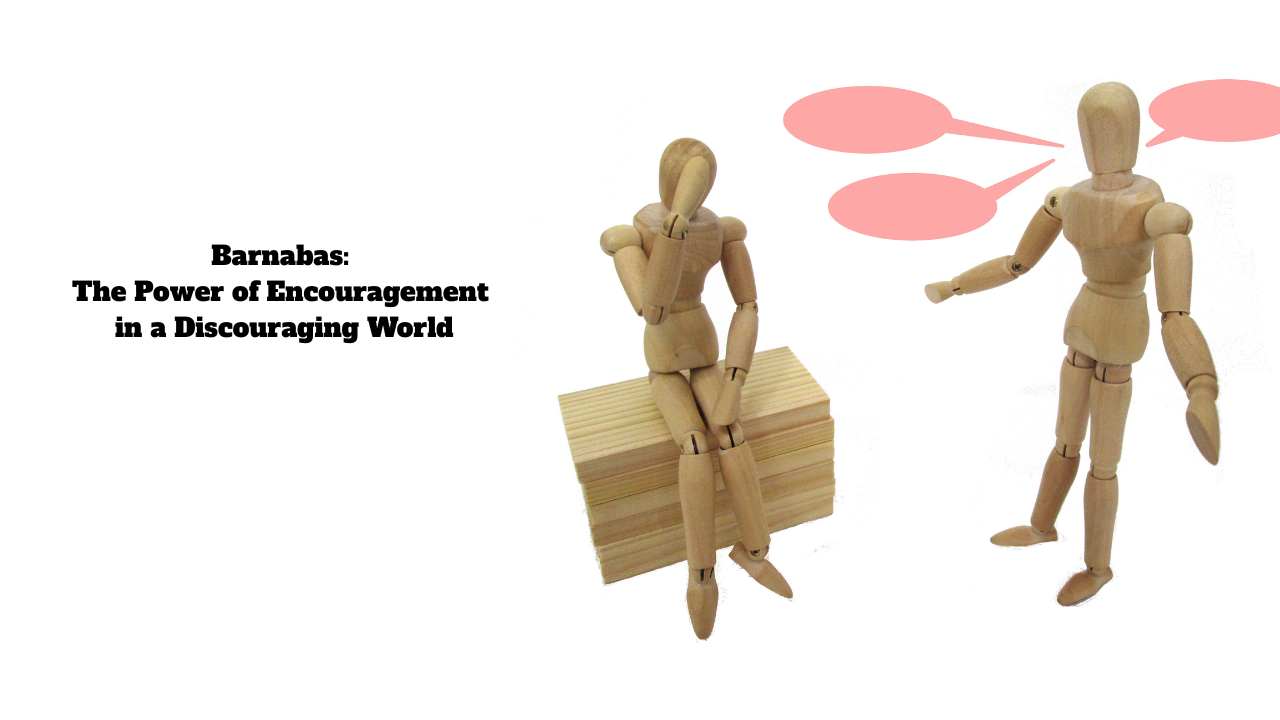
✨ Step into Encouragement
There are voices that drain…
And there are voices that build.
Some words leave a woman questioning herself.
Others call something out of her she did not even realize was there.
And in a world filled with criticism, comparison, and quiet discouragement…
God raises up women who do something different.
They encourage.
In Acts of the Apostles 4:36–37 (KJV), we meet a man whose very name tells the story:
“And Joses… who by the apostles was surnamed Barnabas, (which is, being interpreted, The son of consolation,)…”
Barnabas was not known for position.
He was known for encouragement.
🌿 When Encouragement Becomes a Calling
Barnabas saw what others overlooked.
Where others doubted… he believed.
Where others hesitated… he stepped forward.
When Paul the Apostle was newly converted and still mistrusted, it was Barnabas who brought him in.
“But Barnabas took him, and brought him to the apostles…” — Acts 9:27 (KJV)
He did not wait for certainty.
...Walking in Patience: Trusting God’s Timing Without Rushing the Process
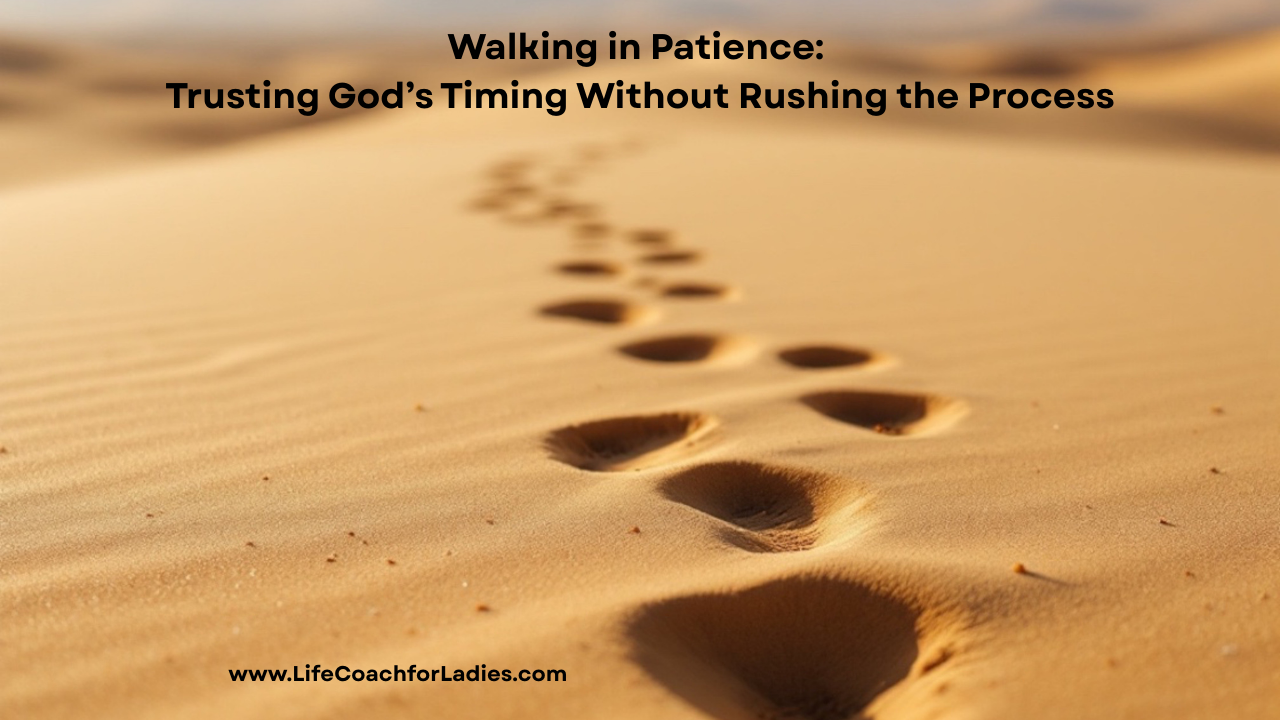
When Waiting Feels Uncomfortable
Few things test faith like waiting. Christian women often carry clear desires, earnest prayers, and faithful effort—yet answers seem delayed. In these seasons, impatience does not always look dramatic. It often shows up quietly as anxiety, overthinking, or the urge to take matters into one’s own hands.
Scripture does not dismiss waiting as wasted time. God uses waiting to form trust, maturity, and discernment.
To walk in patience is to remain faithful without forcing outcomes, trusting that God’s timing is purposeful and precise.
The Lie We Often Walk With (Lie-Locked Living)
The Lie: If God were truly working, this would be happening faster.
This lie pressures women to rush decisions and manipulate outcomes. It frames delay as denial rather than development.
Lie-Locked Living shows up as restlessness, control-seeking, and discouragement during seasons of waiting.
God’s Word reminds us that delay is often preparation, not neglect.
Scripture Anc...
The Early Church: Walking Together in Truth and Unity
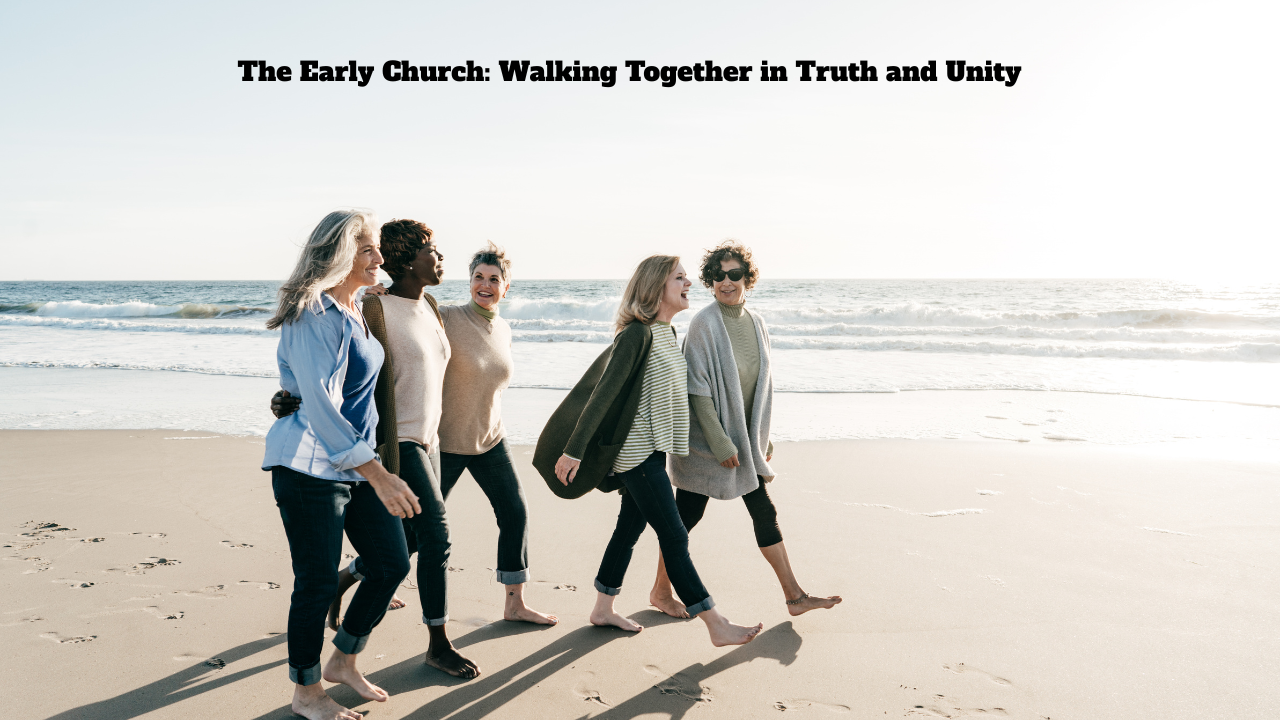
✨ Step into Unity
There is a sacred beauty in a life that is no longer walked alone.
Not because the road becomes easier…
but because it becomes shared.
After all the moments we have walked through—
the surrender of Mary…
the courage of Esther…
the humility of the tax collector…
There comes a quiet question:
Now what?
What does it look like to walk this out… not just personally… but together?
In Acts of the Apostles 2:42–47 (KJV), we are given a glimpse.
Not of a perfect people…
but of a unified one.
“And they continued stedfastly in the apostles’ doctrine and fellowship, and in breaking of bread, and in prayers.” — Acts 2:42 (KJV)
🌿 When Faith Becomes Shared
The early church did not gather out of obligation.
They gathered because something had changed within them.
Truth had taken root.
And truth does not isolate…
it draws together.
They learned together.
They prayed together.
They ate together.
They gave to one another.
And in that rhythm, something holy formed:
...Walking in Growth: Becoming More Like Christ Over Time
When Growth Feels Slow and Uneven
Spiritual growth rarely follows a straight line. Many faithful women expect maturity to look like constant progress, fewer struggles, and steady confidence. When old patterns resurface or growth feels uneven, discouragement can quietly creep in.
Scripture offers a steadier, kinder vision of growth. God forms His daughters patiently, shaping character over time rather than rushing transformation.
To walk in growth is to trust the process God is using to form Christlikeness—step by step, season by season.
The Lie We Often Walk With (Lie-Locked Living)
The Lie: If I were truly growing, I would struggle less by now.
This lie equates growth with ease. It leads women to misinterpret ongoing refinement as failure rather than formation.
Lie-Locked Living shows up as discouragement, self-criticism, and the temptation to measure maturity by emotion rather than obedience.
God’s Word reminds us that growth includes pruning, repetition, and grace.
Scriptur...
Recent Posts
Author

Coach Sandra
Author
At Life Coach for Ladies, we understand your desire for a life that is truly significant—a life that matters. To achieve this, it is essential to step into the purpose for which you were created. However, the world often misleads us with false notions of significance, making us feel less worthy than we truly are. We believe that God has intricately designed each of us for a unique purpose in His Kingdom. He crafts us with intention, uniquely shaping us for His plans. That is why we help women to recognize their significance in God’s Kingdom and cultivate a Truth Mindset. Here’s how we do it: 1. Embrace your true identity as a ‘daughter of the King.’ 2. Discover the unique gifts that the Holy Spirit has specifically and strategically given you. 3. Learn to walk intentionally in those gifts and draw closer to Christ. Schedule a free Transformational Game Plan Session today. Meanwhile, download my free eBook to help you fill the void you might feel and start living with success, significance, and a meaningful legacy. Sandra Krug is a Board Certified Coach (BCC) through the Center for Credentialing and Education. Coach Sandra is a Certified Master Christian Life Coach (CMCLC) through the International Christian Coaching Institute, with Certification as a Transformed Living Coaching Model Specialist and a Spiritual Transformation and Discipleship Niche Specialist. She is a Certified and Licensed Ziglar Choose to Win and See You at the Top Coach. (Ziglar is a name that has been synonymous with integrity and success for over 50 years.) She is a Certified Disc Profile Analyst and a Certified Human Behavior Consultant through Personality Insights. She is also a Certified Christian DISC Facilitator. Coach Sandra has an Advanced Diploma in Biblical Studies from the International School of Ministry and a Master's in Ministry from Christian Leadership University. She also received an Honorary Doctor of Divinity in Business and Ministry from Vision International. Her Christian values are fundamental to her life and coaching ministry. She resides in Florida with her husband, Garrett, and their ranch of rescued animals.
Stay connected with news and updates!

