
Walking in Resilience: Rising After Setbacks and Disappointment
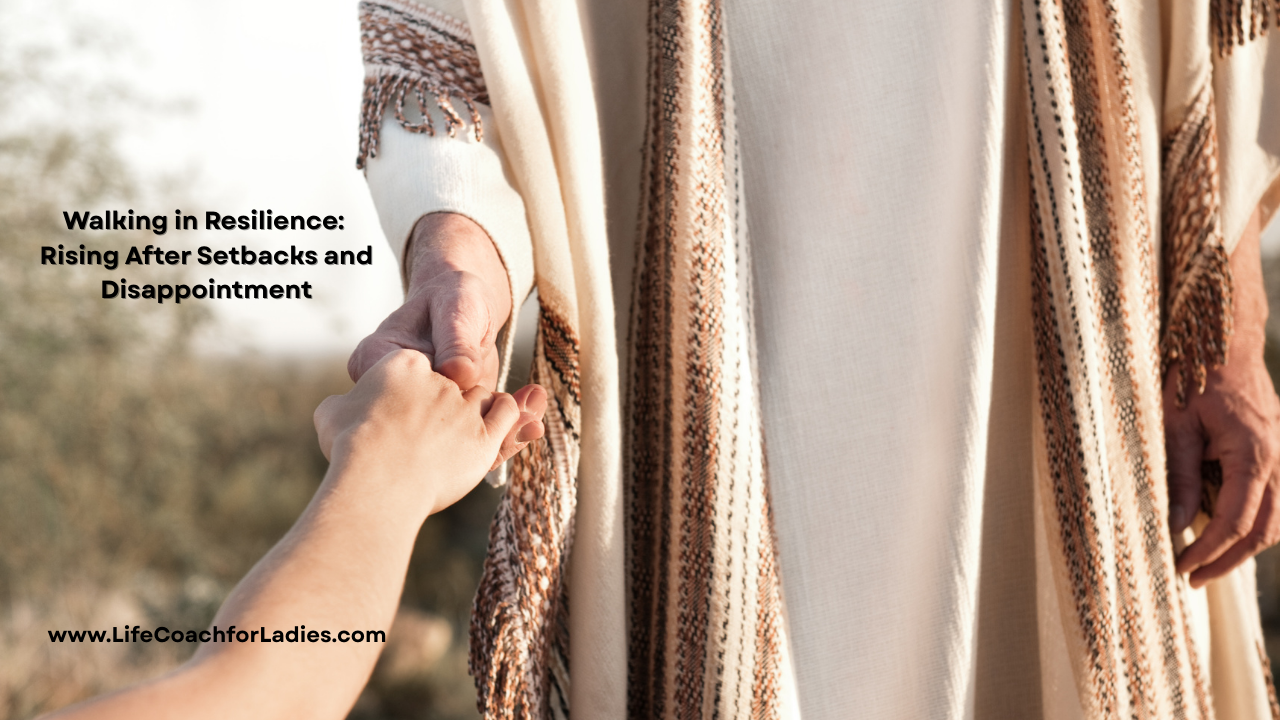
When the Wind Knocks You Down
Setbacks rarely announce themselves. They arrive as unexpected news, delayed answers, closed doors, or quiet disappointments that linger longer than anticipated. Faithful Christian women often internalize these moments, wondering what went wrong or what they missed.
Resilience is not the ability to avoid falling. It is the willingness to rise again—grounded in truth rather than shame.
God does not abandon His daughters in disappointment. He strengthens them to walk in resilience, lifting their gaze from what was lost to what He is still building.
The Lie We Often Walk With (Lie-Locked Living)
The Lie: If I were truly faithful, I would not experience setbacks like this.
This lie turns disappointment into self-accusation. It suggests that difficulty indicates disfavor rather than development.
Lie-Locked Living shows up as discouragement, withdrawal, comparison, and the temptation to stop trying after a fall.
Scripture presents setbacks not as proof o...
Naomi: Trusting God in Bitter Seasons
When Life Does Not Unfold as Expected
Many faithful Christian women begin seasons of life with hope-filled expectations.
Plans feel clear.
The future feels promising.
The path seems steady.
Then sometimes… life turns in ways the heart never anticipated.
Loss arrives.
Disappointment settles in.
And faith must wrestle honestly with pain.
If you have ever walked through a season that felt heavier than you expected, Naomi’s story offers tender and deeply human encouragement.
Because Scripture does not ignore bitter seasons.
It speaks directly into them.
Scripture Foundation (KJV)
“Call me not Naomi, call me Mara: for the Almighty hath dealt very bitterly with me.”
— Ruth 1:20 (KJV)
Few verses in Scripture express grief so plainly.
Naomi does not pretend.
She does not spiritualize her pain.
She speaks honestly about the weight she feels.
And God preserves her words in Scripture.
The Depth of Naomi’s Loss
Naomi’s journey included multiple layers of grief:
-
leavi
...
Walking in Perseverance: Staying Faithful When Progress Is Slow
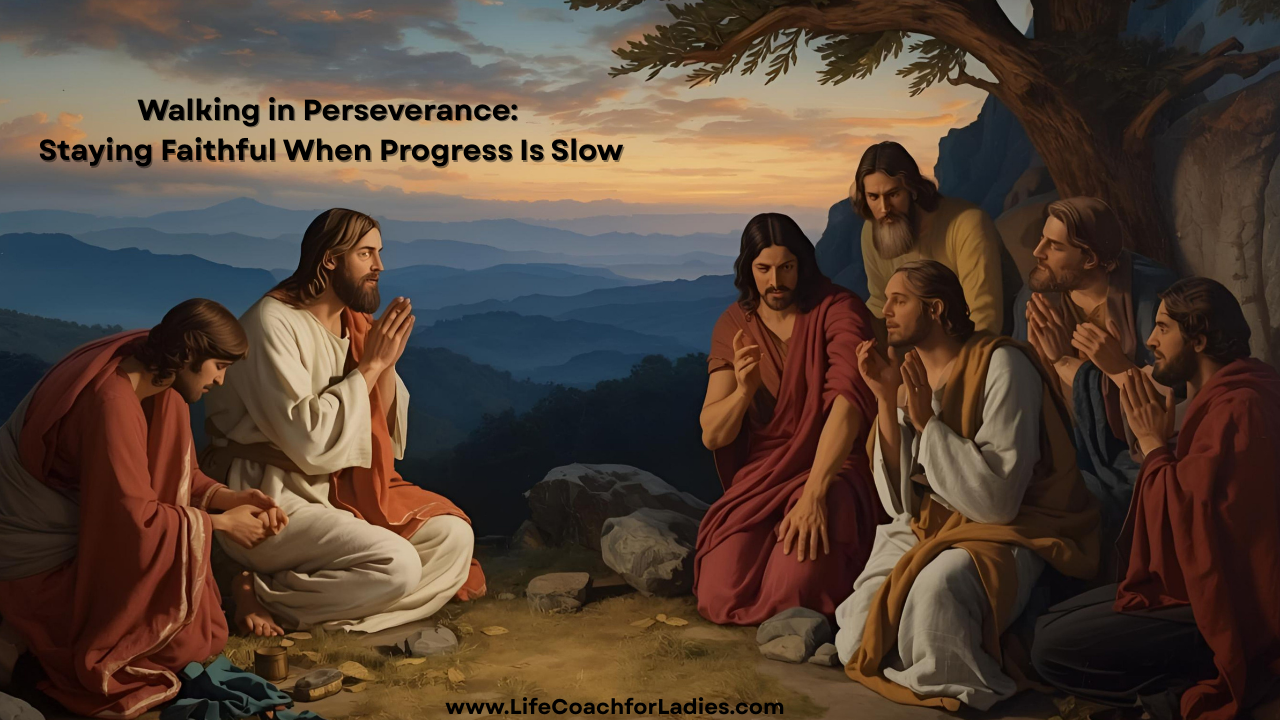
The Long Middle
There is a season of the walk that few people talk about—the long middle. The beginning carried excitement and resolve. The end holds promise and anticipation. But the middle requires perseverance, where progress is measured in inches rather than milestones.
For many Christian women, this is where discouragement quietly settles in. They are still praying. Still obeying. Still showing up. Yet visible change feels slow, and the temptation to wonder whether effort matters begins to surface.
God honors perseverance. Scripture repeatedly affirms that faithfulness sustained over time produces fruit, even when growth is hidden.
The Lie We Often Walk With (Lie-Locked Living)
The Lie: If progress were real, it would be faster by now.
This lie erodes perseverance by redefining success as speed rather than faithfulness. It encourages women to abandon steady obedience in search of quicker validation.
Lie-Locked Living shows up as impatience, discouragement, comparison, and t...
The Woman with the Alabaster Box: Worship That Costs Something
When Love for Jesus Becomes Personal
Many faithful Christian women love the Lord deeply.
They serve.
They give.
They remain faithful in quiet ways.
Yet there are moments in the spiritual journey when love for Christ becomes intensely personal — moments when worship moves beyond routine and into wholehearted surrender.
In those sacred moments, the question often rises:
Am I willing to honor the Lord even when it feels costly or misunderstood?
If you have ever felt your heart drawn toward deeper devotion, the woman with the alabaster box offers one of Scripture’s most tender and powerful examples.
Because true worship often carries a cost.
Scripture Foundation (KJV)
“And, behold, a woman in the city, which was a sinner… brought an alabaster box of ointment.”
— Luke 7:37 (KJV)
The scene is emotionally charged.
The room is watching.
And this unnamed woman steps forward with remarkable courage.
The Courage of Her Worship
This woman’s act was not casual.
It was:
- ...
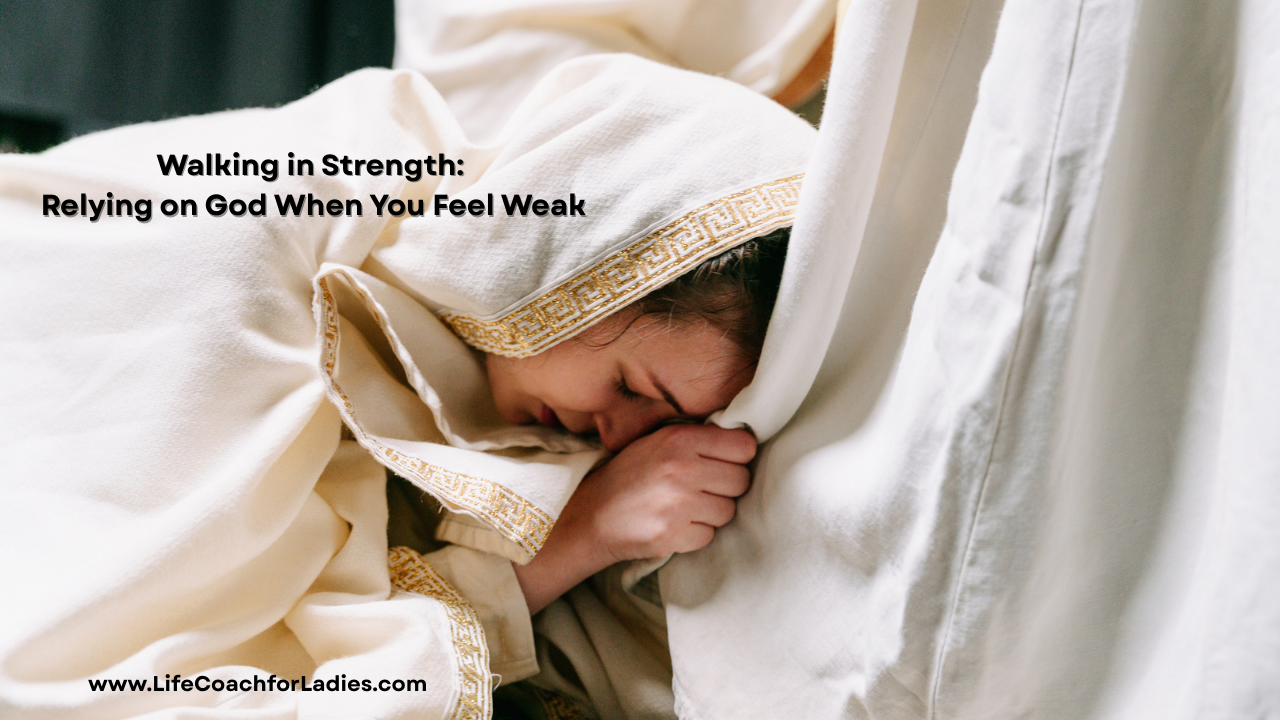
Walking in Strength: Relying on God When You Feel Weak
When Strength Runs Low
There are seasons when strength feels available and seasons when it feels depleted. Faithful Christian women often carry responsibility quietly, showing up for others even when their own reserves are thin. In these moments, weakness can feel like failure rather than a normal signal to rely more deeply on God.
Scripture offers a different perspective. Weakness is not a disqualification. It is an invitation—to shift reliance from self to God.
To walk in strength is not to deny weakness, but to allow God’s power to meet it.
The Lie We Often Walk With (Lie-Locked Living)
The Lie: If I were truly strong in faith, I would not feel weak.
This lie pressures women to perform strength rather than receive it. It encourages self-sufficiency disguised as maturity and discourages honest dependence on God.
Lie-Locked Living shows up as over-functioning, reluctance to ask for help, spiritual exhaustion, and quiet shame around limitation.
God’s Word consistently teaches t...
The Persistent Widow: Faith That Keeps Showing Up
When Answers Seem Delayed
Many faithful Christian women know what it feels like to pray…
and wait.
To believe…
and keep believing.
To bring the same concern before the Lord again and again, quietly wondering:
Lord, do You still see this?
Are my prayers making a difference?
Should I keep asking?
If you have ever walked a season where answers felt slower than your heart hoped, the story of the persistent widow offers steady and strengthening encouragement.
Because sometimes the most powerful faith…
is the faith that keeps showing up.
Scripture Foundation (KJV)
“And he spake a parable unto them to this end, that men ought always to pray, and not to faint.”
— Luke 18:1 (KJV)
Jesus begins this parable with unusual clarity.
He tells us exactly why the story matters.
This is about:
-
prayer that continues
-
faith that endures
-
hearts that do not give up
The Widow’s Quiet Determination
In the parable, the widow faces an unjust judge — a man who:
-
does
...
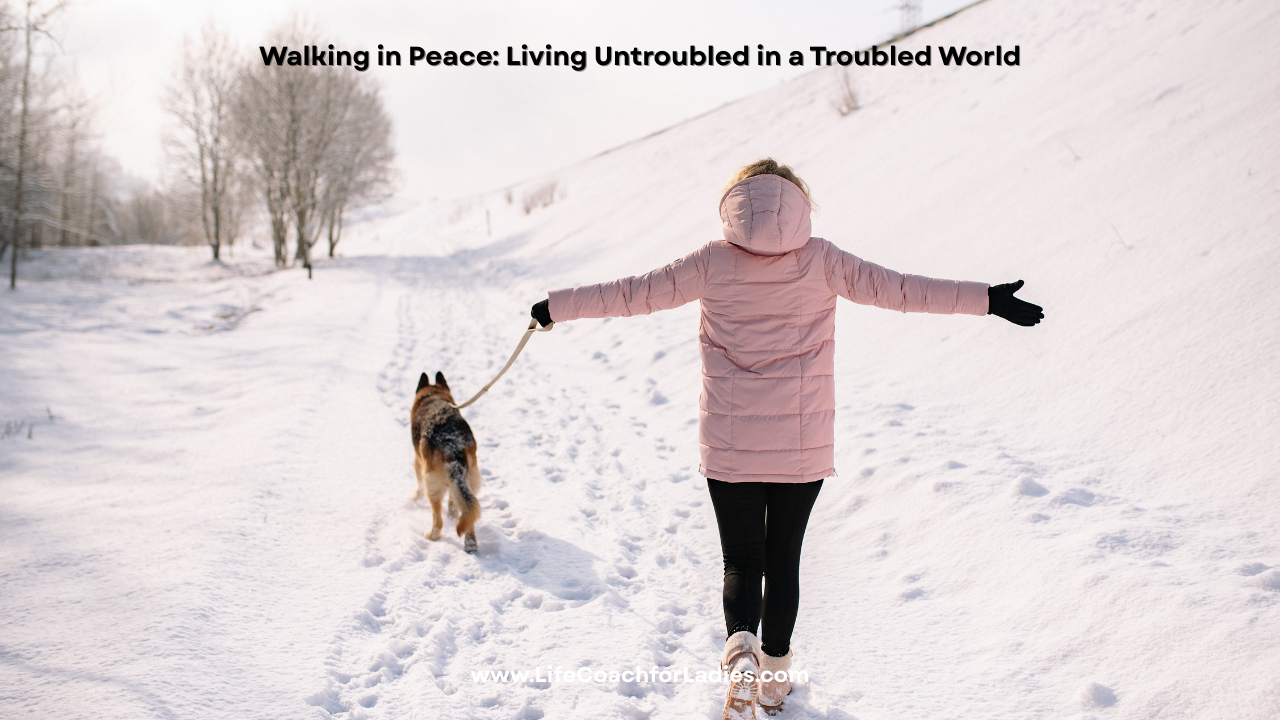
Walking in Peace: Living Untroubled in a Troubled World
When the World Feels Loud and Unsettled
Christian women are not immune to the unrest of the world around them. News cycles churn, cultural expectations shift, relationships strain, and responsibilities continue without pause. Even women grounded in faith can feel internally unsettled when external conditions remain uncertain.
Peace, in Scripture, is never presented as the absence of trouble. It is presented as a steady presence within it. God does not promise His daughters a trouble-free world; He promises them His peace as they walk through it.
To walk in peace is to remain anchored when circumstances are not.
The Lie We Often Walk With (Lie-Locked Living)
The Lie: If I were truly trusting God, I would not feel disturbed by what is happening around me.
This lie pressures women to suppress emotion rather than steward it. It suggests that faith eliminates concern rather than directing it toward God.
Lie-Locked Living shows up as emotional numbness, spiritual performance, or guilt...
Mary of Bethany: Choosing What Matters Most
When Life Feels Full and Fast
Many faithful Christian women carry full schedules and full hearts.
Responsibilities multiply.
Opportunities increase.
The pace of life quietly accelerates.
In busy seasons, a gentle but important question often rises:
Am I giving my attention to what matters most?
If you have ever felt pulled in many directions at once, Mary of Bethany’s quiet decision offers timely and freeing wisdom.
Because sometimes spiritual clarity is not about doing more…
It is about choosing wisely.
☀️ A Summer Reflection
As the days grow longer and summer begins, many women naturally shift into a new seasonal rhythm.
Summer often brings increased activity, family gatherings, travel plans, and fuller calendars.
Yet the gentle invitation of Scripture remains the same in every season: to keep first things first.
Mary’s example reminds us that even in busy and fruitful seasons, choosing time at the Lord’s feet will always yield the greatest return.
Scripture Founda...
Walking in Freedom: Breaking Free from Guilt and Condemnation
When the Past Still Speaks
Many faithful Christian women love God deeply and desire to walk uprightly, yet still carry an invisible weight. Past mistakes, seasons of weakness, or words spoken over them long ago continue to whisper accusation long after repentance has taken place.
Guilt and condemnation often masquerade as humility or responsibility. In reality, they quietly steal joy, confidence, and spiritual freedom. God never intended His daughters to keep rehearsing what He has already forgiven.
Freedom is not denial of the past—it is agreement with God’s grace in the present. God invites His daughters to walk in freedom, no longer bound by shame or self-accusation.
The Lie We Often Walk With (Lie-Locked Living)
The Lie: I may be forgiven, but I should still feel guilty.
This lie keeps women tethered to past failure. It suggests that freedom is earned through ongoing remorse rather than received through grace.
Lie-Locked Living shows up as self-criticism, difficulty acceptin...
Deborah: Courage to Stand and Lead
When Leadership Finds You
Many faithful Christian women are quietly serving when a moment of leadership unexpectedly appears.
A decision that needs wisdom.
A situation that needs clarity.
A moment when others are looking for someone to step forward.
Often the first internal response is hesitation:
Am I the right one?
Am I strong enough for this?
What if I step forward and it feels uncomfortable?
If you have ever sensed God nudging you into a role that stretched your confidence, Deborah’s story offers steady and strengthening encouragement.
Because sometimes leadership is not something we pursue…
Sometimes it is something God entrusts.
USA Flag Day Reflection
As many pause to observe Flag Day this week, we are reminded how visible symbols often represent deeper allegiance.
Scripture gently calls believers to an even higher loyalty — a heart fully devoted to the Lord above every earthly banner.
Moments of decision, courage, and faithful obedience often reveal where our deep...
Recent Posts
Author

Coach Sandra
Author
At Life Coach for Ladies, we understand your desire for a life that is truly significant—a life that matters. To achieve this, it is essential to step into the purpose for which you were created. However, the world often misleads us with false notions of significance, making us feel less worthy than we truly are. We believe that God has intricately designed each of us for a unique purpose in His Kingdom. He crafts us with intention, uniquely shaping us for His plans. That is why we help women to recognize their significance in God’s Kingdom and cultivate a Truth Mindset. Here’s how we do it: 1. Embrace your true identity as a ‘daughter of the King.’ 2. Discover the unique gifts that the Holy Spirit has specifically and strategically given you. 3. Learn to walk intentionally in those gifts and draw closer to Christ. Schedule a free Transformational Game Plan Session today. Meanwhile, download my free eBook to help you fill the void you might feel and start living with success, significance, and a meaningful legacy. Sandra Krug is a Board Certified Coach (BCC) through the Center for Credentialing and Education. Coach Sandra is a Certified Master Christian Life Coach (CMCLC) through the International Christian Coaching Institute, with Certification as a Transformed Living Coaching Model Specialist and a Spiritual Transformation and Discipleship Niche Specialist. She is a Certified and Licensed Ziglar Choose to Win and See You at the Top Coach. (Ziglar is a name that has been synonymous with integrity and success for over 50 years.) She is a Certified Disc Profile Analyst and a Certified Human Behavior Consultant through Personality Insights. She is also a Certified Christian DISC Facilitator. Coach Sandra has an Advanced Diploma in Biblical Studies from the International School of Ministry and a Master's in Ministry from Christian Leadership University. She also received an Honorary Doctor of Divinity in Business and Ministry from Vision International. Her Christian values are fundamental to her life and coaching ministry. She resides in Florida with her husband, Garrett, and their ranch of rescued animals.
Stay connected with news and updates!

