
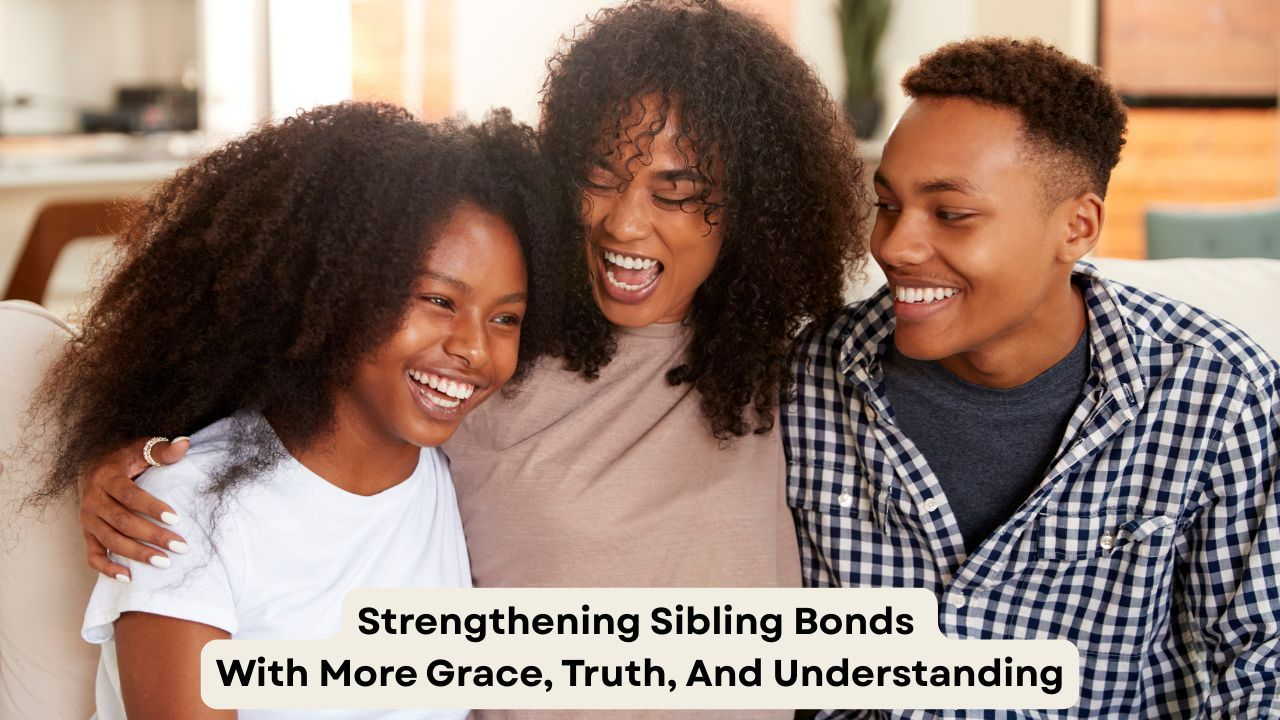
Strengthening Sibling Bonds With More Grace, Truth, And Understanding
Sisters and Brothers in Christ:
Sibling relationships are among the longest relationships many of us will ever have. Long after childhood has faded, careers have shifted, and life has taken each person down different roads, brothers and sisters remain part of the story. Shared memories, family traditions, old rivalries, private jokes, and quiet hurts often bind siblings together in complex ways.
For many Christian women, the relationship with siblings is a mixture of gratitude and grief, closeness and distance, love and unspoken tension. Some feel deeply connected. Others feel like strangers who happen to share a last name. Some ache over estranged brothers or sisters. Others grieve those who have gone home to be with the Lord.
The Word of God holds up a beautiful standard:
“Behold, how good and how pleasant it is for brethren to dwell together in unity!”
— Psalm 133:1, KJV
Unity does not mean perfect agreement.
Unity does not require identical personalities or perspectives.
Unity does not erase history.
Unity is a spiritual bond of peace, forgiveness, love, and mutual honor.
As Christian women, there is great blessing in pursuing this kind of unity, even in imperfect families.
The Sacred Weight of Sibling Relationships
Siblings know our beginning.
They know the home we grew up in.
They know the rules, the rhythms, and the unspoken expectations.
They know the laughter and the tears.
Because of this shared history, sibling relationships can stir up deep emotion:
-
Old patterns can resurface quickly.
-
Childhood roles can feel hard to break.
-
Comparisons may still linger in the background.
-
Jealousy, favoritism, or misunderstandings may still influence how we relate.
At the same time, siblings can be one of God’s sweetest gifts:
-
A familiar voice in a changing world.
-
A partner in caring for aging parents.
-
A fellow witness to God’s faithfulness over time.
-
A brother or sister in Christ, not only in family blood, but in the blood of the Lamb.
God cares about how we relate to our siblings. He invites us to approach these relationships with wisdom, courage, and compassion.
Joseph and His Brothers
Few sibling stories in Scripture are as raw and redemptive as that of Joseph and his brothers. Their relationship journey included jealousy, rejection, betrayal, grief, and finally reconciliation.
Joseph’s brothers envied him, resented him, and eventually betrayed him:
“And when they saw him afar off, even before he came near unto them, they conspired against him to slay him.”
— Genesis 37:18, KJV
Family jealousy and comparison opened a doorway to cruelty.
Yet God never abandoned Joseph.
Through years of suffering, God prepared Joseph for a position of influence and mercy. When famine struck and his brothers came to Egypt desperate for grain, Joseph had every earthly right to seek revenge. But he chose a different path.
“But as for you, ye thought evil against me; but God meant it unto good…”
— Genesis 50:20, KJV
Joseph saw divine purpose in human failure.
He chose forgiveness over bitterness.
He chose restoration over revenge.
This does not mean all sibling relationships will be reconciled in this life. But Joseph’s story reminds us that God is able to work deep healing in the most fractured of family stories. God can bring clarity, closure, or new beginnings according to His will.
How DISC Shapes Sibling Dynamics
Understanding personality differences is essential when navigating sibling relationships. Many conflicts come not from lack of love, but from lack of understanding.
🌟 D Siblings – The Determined Ones
-
Bold, decisive, direct.
-
Often step into leadership roles.
-
May be perceived as bossy or unbending.
-
Desire respect and straightforward communication.
A D sibling often loves by solving problems or taking charge in crises. However, they may struggle to show tenderness in ways others easily recognize.
🌟 I Siblings – The Expressive Ones
-
Fun-loving, talkative, energetic.
-
Thrive on connection, stories, and shared experiences.
-
May avoid deep conflict because they do not want to lose the relationship.
An I sibling brings joy, laughter, and connection, yet may feel hurt if others do not reciprocate that same energy or enthusiasm.
🌟 S Siblings – The Supportive Ones
-
Gentle, dependable, and peace-seeking.
-
Often the “glue” that holds the family together.
-
May carry unspoken emotional burdens to keep harmony.
An S sibling is frequently the quiet peacemaker, yet often needs encouragement to share their feelings honestly.
🌟 C Siblings – The Thoughtful Ones
-
Analytical, private, systematic.
-
Express love through responsibility and careful decisions.
-
May be misread as detached or critical.
A C sibling cares deeply but shows it through quality, accuracy, and thoughtful help. They may struggle with emotional expression but are often very loyal.
Knowing your own DISC style and your siblings’ likely style brings grace into the relationship. You can stop expecting them to love like you do and start appreciating how they are wired.
Attachment Styles and Sibling Patterns
Beyond personality, attachment styles also shape how siblings relate:
Secure Attachment
-
Comfortable being close and independent at the same time.
-
Able to address misunderstandings, apologize, and forgive.
Anxious Attachment
-
Fears rejection or being left out.
-
May interpret silence as rejection.
-
Can overgive or overexplain to feel accepted.
Avoidant Attachment
-
Hesitant to share feelings.
-
Keeps distance to feel safe.
-
May appear “fine” but deeply struggles with trust.
Disorganized Attachment
-
Longs for closeness but fears being hurt.
-
Sends mixed signals.
-
Comes from inconsistent or frightening early experiences.
When Christian women begin to understand these patterns, they can approach sibling relationships with empathy rather than irritation. Awareness brings softness where judgment once stood.
Three Strategies for Strengthening Sibling Bonds
God does not ask us to control the outcome of every relationship, but He does invite us to walk in wisdom, humility, and love. Here are three Christ-centered strategies to intentionally strengthen your sibling relationships where possible.
⭐ Strategy 1: Initiate a Healing Conversation with Humility
Healing often begins with one brave step.
Ask the Lord:
-
Is there a conversation I need to have with my sibling?
-
Is there an apology I need to give?
-
Is there a misunderstanding I can gently clarify?
Approach the conversation with humility rather than accusation. Use “I” statements instead of “you” statements. For example:
-
“I felt hurt when…” instead of “You always…”
-
“I would love for us to be closer…” instead of “You never try…”
Pray before you speak. Ask the Lord to guard your words and guide your tone. Whether the sibling receives it or not, you will know that you have honored God with your effort toward peace.
“If it be possible, as much as lieth in you, live peaceably with all men.”
— Romans 12:18, KJV
⭐ Strategy 2: Celebrate Their Strengths Rather Than Their Flaws
Comparison and criticism are some of the enemy’s favorite tools to destroy sibling unity. Instead of focusing on what your siblings are not, ask the Lord to help you see what they are.
Reflect on questions like:
-
What strengths has God given my brother or sister?
-
How have they shown resilience, kindness, or courage?
-
Where have I been harsh in my judgment?
Then, express appreciation, even in a simple way:
-
Send a text: “I admire your work ethic,” or “I appreciate how you take care of your family.”
-
Write a note of encouragement.
-
Speak blessing over them in prayer.
This shift in focus does not erase real issues, but it helps to soften the heart and strengthen unity.
⭐ Strategy 3: Create New Adult Memories
Many siblings feel stuck in childhood roles, but you are no longer little children. You are grown women, perhaps with families of your own, and you can create new moments that are healthier and more intentional.
Consider:
-
a monthly phone call to catch up
-
an annual sister or sibling day
-
praying together over shared family concerns
-
doing a joint project for your parents or for ministry
-
intentionally asking about their life, not just surface details
New memories can help gently rewrite the story, especially when old ones were painful or distant.
Even if a sibling is not open to closeness, you can still choose to walk in love, forgiveness, and blessing before the Lord.
A Gentle Word for Your Heart Today
Perhaps your relationship with your siblings is sweet, and you simply want to guard it. Perhaps it is strained, and you long for healing. Perhaps there is distance, and your heart aches for what could have been.
Take comfort in knowing that the Lord sees every detail.
He knows:
-
the family you grew up in
-
the things you wish were different
-
the things you cherish
-
the quiet prayers you have prayed over these relationships
He holds your siblings in His hand.
He holds you in His hand.
He cares deeply about every sibling story.
Whether He leads you into deeper connection, quiet release, patient prayer, or courageous conversation, He will not leave you without wisdom.
“If any of you lack wisdom, let him ask of God, that giveth to all men liberally…”
— James 1:5, KJV
You are not just a sister by blood.
You are a sister in Christ.
You are a daughter of the King.
And as you walk in grace, humility, and truth, you become a living testimony of His love within your family line.
Stay connected with news and updates!
Join our mailing list. You can download a free gift and receive the latest news and updates from our team.
Don't worry, your information will not be shared.
Recent Posts
Author

Coach Sandra
Author
At Life Coach for Ladies, we understand your desire for a life that is truly significant—a life that matters. To achieve this, it is essential to step into the purpose for which you were created. However, the world often misleads us with false notions of significance, making us feel less worthy than we truly are. We believe that God has intricately designed each of us for a unique purpose in His Kingdom. He crafts us with intention, uniquely shaping us for His plans. That is why we help women to recognize their significance in God’s Kingdom and cultivate a Truth Mindset. Here’s how we do it: 1. Embrace your true identity as a ‘daughter of the King.’ 2. Discover the unique gifts that the Holy Spirit has specifically and strategically given you. 3. Learn to walk intentionally in those gifts and draw closer to Christ. Schedule a free Transformational Game Plan Session today. Meanwhile, download my free eBook to help you fill the void you might feel and start living with success, significance, and a meaningful legacy. Sandra Krug is a Board Certified Coach (BCC) through the Center for Credentialing and Education. Coach Sandra is a Certified Master Christian Life Coach (CMCLC) through the International Christian Coaching Institute, with Certification as a Transformed Living Coaching Model Specialist and a Spiritual Transformation and Discipleship Niche Specialist. She is a Certified and Licensed Ziglar Choose to Win and See You at the Top Coach. (Ziglar is a name that has been synonymous with integrity and success for over 50 years.) She is a Certified Disc Profile Analyst and a Certified Human Behavior Consultant through Personality Insights. She is also a Certified Christian DISC Facilitator. Coach Sandra has an Advanced Diploma in Biblical Studies from the International School of Ministry and a Master's in Ministry from Christian Leadership University. She also received an Honorary Doctor of Divinity in Business and Ministry from Vision International. Her Christian values are fundamental to her life and coaching ministry. She resides in Florida with her husband, Garrett, and their ranch of rescued animals.
Stay connected with news and updates!

