
A Daughter’s Heart: Honoring Generations with Grace, Wisdom, and Truth
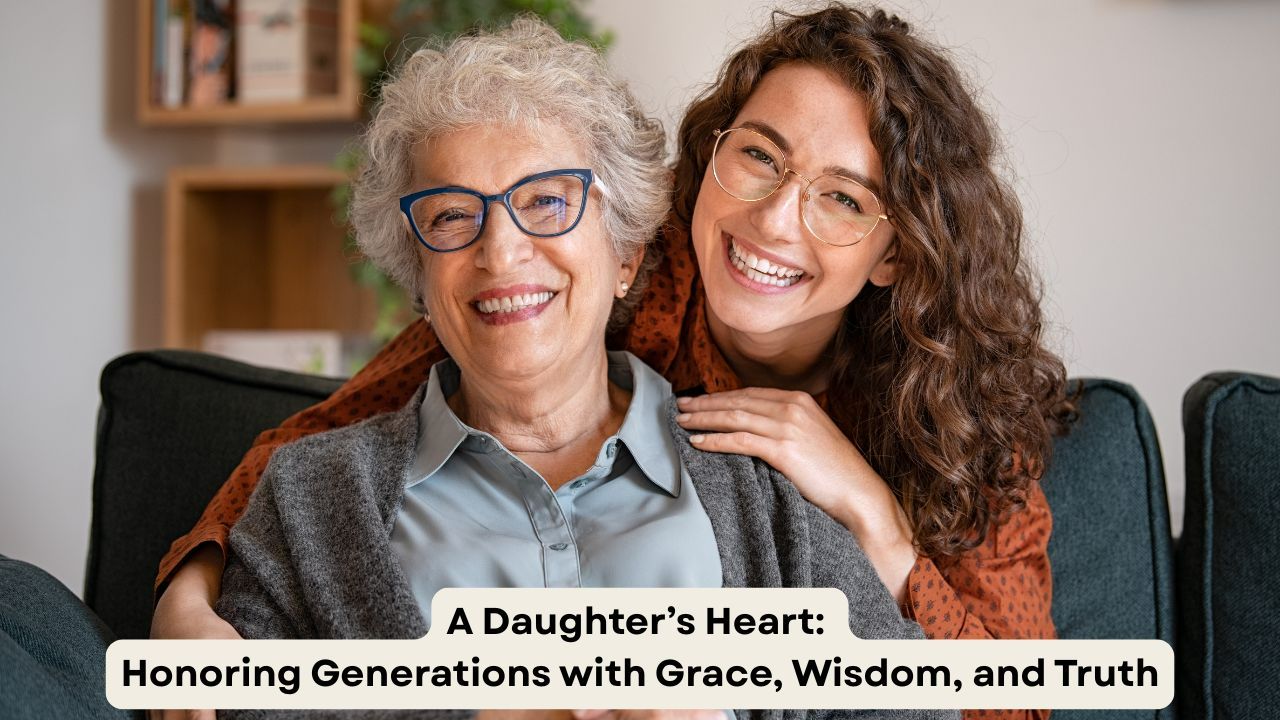
There is a quiet beauty in the heart of a daughter—a soft strength woven into her very being by the hand of God. Whether she is a young daughter learning to stand tall, a grown daughter walking out her own life, or a daughter reflecting upon her parents in their later years, the role of “daughter” never fully fades. It shapes the spirit. It marks the heart. It influences identity, trust, and emotional patterns in ways that often remain unseen—yet deeply felt.
Even as women step into adulthood, leadership, motherhood, career, and ministry, the daughter-role lingers. Old memories whisper. Childhood expectations echo. Family patterns show up in emotional reactions long after the moments that formed them. Many Christian women wrestle with the delicate balance of honoring parents while also healing from the past. Some carry warmth and blessing; others carry wounds and unanswered questions.
Yet God, in His tender wisdom, places the role of daughter within a sacred frame:
“Honour thy father and thy mother…” — Exodus 20:12, KJV
This command is timeless—not because every parent is deserving of perfect honor, but because God desires healing, order, and dignity in the lineage of His daughters. Honor is not the same as perfection. It is not blind obedience. It is not enabling harmful behavior. Honor is the posture of a heart shaped by Christ—a heart choosing truth, grace, and boundaries when needed.
The Daughter Journey: A Place of Both Tenderness and Tension
The daughter-role can stir deep emotions:
-
longing to be loved unconditionally
-
desire to make parents proud
-
grief over what never was
-
joy in what has been
-
confusion over how to navigate differences
-
fear of repeating generational patterns
-
pressure to carry the emotional weight of the family
-
yearning for spiritual unity
A woman may be strong and confident in every other area of life, yet still feel like a child again when navigating old wounds or patterns in her family of origin. This is not immaturity—it is humanity. Families shape the foundation of emotional expectation. And daughters, especially, feel the pull between love and self-protection.
But in Christ, women learn a new way of walking—as daughters of earthly parents, yes, but even more as daughters of the King.
Ruth and Naomi—A Daughter’s Devotion
One of Scripture’s most beautiful portraits of daughterhood does not come from biological family, but from chosen family. Ruth’s relationship with Naomi reveals the heart of a godly daughter—faithful, devoted, humble, and strong.
When Naomi urged Ruth to return to her homeland, Ruth replied:
“Whither thou goest, I will go… thy people shall be my people, and thy God my God.” — Ruth 1:16, KJV
Ruth chose loyalty over convenience.
Presence over distance.
Faithfulness over fear.
Her story teaches us:
-
daughterhood can be chosen
-
love can be covenantal, not just biological
-
God blesses women who honor relationships with integrity
-
legacy flows from devotion
God wove Ruth into the lineage of Christ because of her daughter-heart—loyal, courageous, and grounded in love.
How DISC Affects the Way Women Show Up as Daughters
Understanding personality helps women walk into grace instead of guilt.
🌟 D – The Determined Daughter
-
Independent, strong-willed, often takes charge
-
May appear distant but deeply values respect
-
Wants clarity, honesty, and fairness
-
Struggles with emotional expectations from parents
-
Best supported by direct communication
🌟 I – The Encouraging Daughter
-
Expressive, affectionate, and relational
-
Loves connection but avoids difficult truths
-
Brings joy into family gatherings
-
Struggles when relationships feel strained
-
Needs affirmation and emotional safety
🌟 S – The Supportive Daughter
-
Loyal, dependable, steady, peace-loving
-
Avoids conflict to keep harmony
-
Often carries the emotional weight of the family
-
May feel torn between loyalty and self-care
-
Needs reassurance that boundaries are not betrayal
🌟 C – The Conscientious Daughter
-
Responsible, thoughtful, detail-oriented
-
Shows love through service and reliability
-
May struggle with criticism or unrealistic expectations
-
Needs clear expectations and frequent appreciation
-
Often becomes the “fixer” or “problem-solver”
Understanding these patterns brings compassion—for yourself and for your parents.
Attachment Styles: The Emotional Lens Through Which Daughters Relate
Attachment styles, formed in childhood, often show up in adult relationships with parents:
Secure Attachment
-
Comfortable giving and receiving love
-
Healthy independence
-
Honesty without fear
-
Warm, steady connection
Anxious Attachment
-
Fears disappointing parents
-
Overthinks tone, reactions, and boundaries
-
Seeks approval as a form of safety
Avoidant Attachment
-
Keeps distance to avoid hurt
-
Appears strong, but often feels alone
-
Struggles with emotional closeness
Disorganized Attachment
-
Grew up with inconsistency or fear
-
Wants closeness but fears vulnerability
-
Tension between longing and self-protection
Naming these patterns helps women understand their reactions with compassion rather than shame.
Generational Patterns and How God Heals Them
Some daughters carry blessings passed down through generations—faith, strength, resilience, hospitality, courage, service. Others carry burdens—silence, criticism, alcohol or substance issues, abandonment, favoritism, unresolved trauma, emotional enmeshment.
But Christ came to break cycles.
To heal memories.
To restore identity.
To reveal truth.
To give new beginnings.
“He healeth the broken in heart, and bindeth up their wounds.” — Psalm 147:3
The Lord meets daughters where they are—not where they “should have been.” His healing allows Christian women to honor parents with grace while walking in emotional truth.
Three Strategies for Growing as a Christian Daughter
⭐ 1. Practice Honoring Without Absorbing Harm
Honor means:
-
speaking respectfully
-
praying for parents
-
forgiving where needed
-
choosing truth over resentment
-
setting boundaries when appropriate
It does not mean tolerating emotional pressure, manipulation, or unhealthy expectations. You can honor someone while protecting your heart.
Ask yourself:
What does honor look like in my situation through the lens of Christ?
Sometimes honor is presence.
Sometimes it is a phone call.
Sometimes it is forgiveness.
Sometimes it is prayer.
Sometimes it is a peaceful boundary.
⭐ 2. Reframe Childhood Narratives Through Scripture
Rewrite stories through truth, not trauma.
Ask:
-
What did I believe about myself growing up?
-
What does God say about me now?
-
Which of my reactions come from old wounds, not current reality?
Pair each old lie with a KJV truth:
-
“I am not enough” → “Ye are complete in Him.” (Colossians 2:10)
-
“I have to earn love” → “I have loved thee with an everlasting love.” (Jeremiah 31:3)
-
“I must stay small to be accepted” → “Ye are… a royal priesthood.” (1 Peter 2:9)
Identity heals when truth becomes the anchor.
⭐ 3. Initiate One Act of Grace Each Month
Small, intentional steps build healing:
-
write a letter of appreciation
-
ask a meaningful question about their past
-
schedule a coffee or phone call
-
pray for them specifically
-
speak a blessing over their life
-
forgive quietly in your heart
-
release expectations that no longer fit your season
Grace creates space for God to work in places where words cannot go.
A Gentle Word for Your Heart Today
No matter what your relationship with your parents looks like today—warm, wounded, distant, close, complicated, or healing—you are held by the Lord with perfect love.
You are a daughter of earthly parents,
but you are also a daughter of the King.
Your identity is secure.
Your story matters.
Your heart is seen.
Your healing is possible.
Your honor is a fragrance to the Lord.
Your future is not limited by your past.
Walk in grace.
Walk in truth.
Walk as the beloved daughter He created you to be.
Stay connected with news and updates!
Join our mailing list. You can download a free gift and receive the latest news and updates from our team.
Don't worry, your information will not be shared.
Recent Posts
Author

Coach Sandra
Author
At Life Coach for Ladies, we understand your desire for a life that is truly significant—a life that matters. To achieve this, it is essential to step into the purpose for which you were created. However, the world often misleads us with false notions of significance, making us feel less worthy than we truly are. We believe that God has intricately designed each of us for a unique purpose in His Kingdom. He crafts us with intention, uniquely shaping us for His plans. That is why we help women to recognize their significance in God’s Kingdom and cultivate a Truth Mindset. Here’s how we do it: 1. Embrace your true identity as a ‘daughter of the King.’ 2. Discover the unique gifts that the Holy Spirit has specifically and strategically given you. 3. Learn to walk intentionally in those gifts and draw closer to Christ. Schedule a free Transformational Game Plan Session today. Meanwhile, download my free eBook to help you fill the void you might feel and start living with success, significance, and a meaningful legacy. Sandra Krug is a Board Certified Coach (BCC) through the Center for Credentialing and Education. Coach Sandra is a Certified Master Christian Life Coach (CMCLC) through the International Christian Coaching Institute, with Certification as a Transformed Living Coaching Model Specialist and a Spiritual Transformation and Discipleship Niche Specialist. She is a Certified and Licensed Ziglar Choose to Win and See You at the Top Coach. (Ziglar is a name that has been synonymous with integrity and success for over 50 years.) She is a Certified Disc Profile Analyst and a Certified Human Behavior Consultant through Personality Insights. She is also a Certified Christian DISC Facilitator. Coach Sandra has an Advanced Diploma in Biblical Studies from the International School of Ministry and a Master's in Ministry from Christian Leadership University. She also received an Honorary Doctor of Divinity in Business and Ministry from Vision International. Her Christian values are fundamental to her life and coaching ministry. She resides in Florida with her husband, Garrett, and their ranch of rescued animals.
Stay connected with news and updates!

